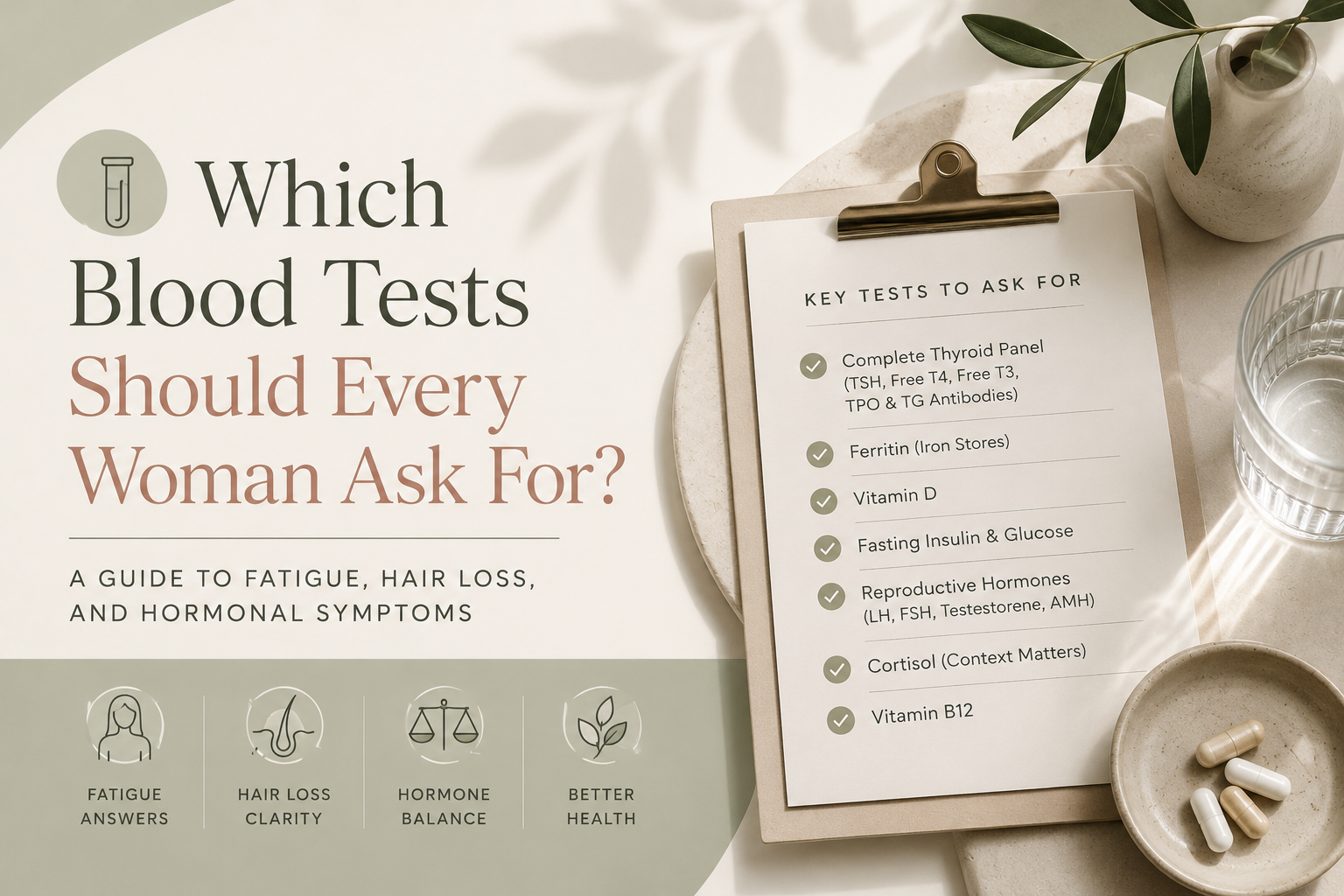
Which Blood Tests Should Every Woman Ask For? A Guide to Fatigue, Hair Loss, and Hormonal Symptoms
Fatigue, hair loss, irregular periods, and brain fog often have identifiable causes on a blood panel. Here are the blood tests every woman should consider asking her doctor for, and why each one matters.
Written By Admin
Published On JULY 29, 2026
Which Blood Tests Should Every Woman Ask For? A Guide to Fatigue, Hair Loss, and Hormonal Symptoms
"Your labs look normal." It's one of the most quietly frustrating sentences a woman can hear from a doctor while still feeling exhausted, watching her hair thin, or wondering why her periods have become unpredictable. Often, the issue isn't that nothing is wrong, it's that the standard basic panel simply didn't test for the right things in the first place.
Routine blood work typically covers a narrow set of markers, useful for catching major issues but often insufficient for the kind of subtle hormonal and nutritional imbalances that show up as fatigue, hair loss, irregular cycles, stubborn weight, or brain fog. Knowing which specific tests to ask for can turn a frustrating "everything looks fine" appointment into one that actually identifies what's going on.
Why Standard Panels Often Miss the Full Picture
A typical annual blood panel usually includes a complete blood count, basic metabolic panel, and sometimes a simple lipid panel. These are valuable for catching anaemia, kidney or liver dysfunction, and cholesterol issues, but they say very little about thyroid function, reproductive hormones, or the nutrient deficiencies that commonly affect women specifically.
This gap is part of why so many women spend months or years being told their labs are normal while symptoms persist. Requesting more targeted testing, when clinically appropriate, can help close that gap considerably.
A Complete Thyroid Panel, Not Just TSH
Many standard panels test only TSH, thyroid stimulating hormone, which can miss meaningful thyroid dysfunction that a more complete panel would catch. A fuller thyroid workup includes TSH, free T4, free T3, and thyroid antibodies (TPO and thyroglobulin antibodies), which can identify autoimmune thyroid conditions like Hashimoto's thyroiditis even when TSH alone appears within normal range.
Thyroid dysfunction can present as fatigue, hair thinning, weight changes, cold sensitivity, and mood changes, symptoms that overlap significantly with other hormonal and nutritional issues, which is exactly why a complete panel, rather than TSH alone, matters so much for accurate diagnosis.
Ferritin: The Iron Marker Most Panels Skip
Many standard panels check haemoglobin but skip ferritin, the protein that reflects your body's stored iron reserves. A woman can have technically normal haemoglobin while still having significantly depleted iron stores, a pattern particularly common in women with heavy periods, and one that can independently cause fatigue and hair loss even without full-blown anaemia.
Requesting ferritin specifically, rather than assuming a normal haemoglobin result rules out iron-related fatigue, is one of the more commonly missed but genuinely useful additions to a standard panel.
Vitamin D Levels
Vitamin D deficiency is remarkably common, particularly among women who spend most of their time indoors or live in regions with limited sun exposure for parts of the year. Beyond its well-known role in bone health, vitamin D is increasingly studied for its involvement in immune function, mood regulation, and even hormonal balance.
Since vitamin D isn't part of most routine panels by default, it's worth specifically requesting, especially if you're dealing with fatigue, mood changes, or frequent illness alongside other unexplained symptoms.
Fasting Insulin and Fasting Glucose
Standard panels often check fasting glucose but rarely include fasting insulin, despite insulin resistance frequently developing years before blood sugar itself becomes abnormal. For women with irregular periods, PCOS symptoms, or unexplained weight changes, fasting insulin, sometimes combined with HbA1c for a fuller picture, can reveal early insulin resistance that a glucose reading alone would miss entirely.
Reproductive Hormone Panel
For women experiencing irregular cycles, fertility concerns, or symptoms suggestive of PCOS, a reproductive hormone panel typically includes LH, FSH, testosterone, and sometimes AMH (anti-Müllerian hormone), which offers insight into ovarian reserve. These markers, interpreted together with cycle history and symptoms, help distinguish between different underlying causes of irregular ovulation, since several different conditions can present with overlapping symptoms.
Cortisol and the Case for Context
Cortisol testing is more nuanced than most other markers on this list, since a single blood draw only captures one moment in a naturally fluctuating daily rhythm. Some practitioners use salivary or urinary cortisol testing across multiple points in the day to get a fuller picture of the cortisol curve, which can be more informative than a single blood measurement for women whose symptoms suggest chronic stress-related hormonal disruption.
Vitamin B12
B12 deficiency can cause fatigue, brain fog, and mood changes, and is more common in women following vegetarian or vegan diets, as well as those with certain digestive conditions that impair absorption. Like vitamin D, B12 isn't always included in a default panel, making it worth specifically requesting if fatigue or cognitive symptoms are a concern.
How to Approach This Conversation With Your Doctor
Rather than requesting every test on this list at once, it can help to bring a clear, specific list of your symptoms and ask directly which of these markers might be relevant to investigate given your particular situation. Framing it as "I've been experiencing X, Y, and Z, and I'd like to rule out thyroid and iron issues specifically" tends to lead to a more productive conversation than a vague request for "more tests."
If a provider is dismissive of a reasonable, symptom-based request for testing, seeking a second opinion is a completely valid option. You know your own body's patterns better than anyone else in the room, and persistent, unexplained symptoms deserve a thorough investigation rather than a quick reassurance that everything looks fine.
The Bottom Line
Fatigue, hair loss, irregular periods, and brain fog are not things you simply have to accept as an unavoidable part of being busy or getting older. Many of these symptoms have identifiable, testable causes that a standard annual panel often misses entirely.
Knowing which specific tests to ask for, complete thyroid function, ferritin, vitamin D, fasting insulin, reproductive hormones, and B12, puts you in a stronger position to advocate for yourself and get real answers, rather than leaving a doctor's appointment with more questions than you walked in with.
Frequently Asked Questions
Why do my blood tests look normal even though I feel unwell? Standard panels often exclude markers like ferritin, complete thyroid antibodies, fasting insulin, and vitamin D, all of which can reveal underlying issues that a basic panel misses.
What blood tests should I ask for if I have unexplained fatigue? A complete thyroid panel, ferritin, vitamin D, and vitamin B12 are commonly worth requesting for unexplained fatigue, since deficiencies or imbalances in any of these can present as persistent tiredness.
Which tests are relevant for irregular periods or suspected PCOS? A reproductive hormone panel including LH, FSH, testosterone, and sometimes AMH, along with fasting insulin and glucose, can help identify underlying causes of irregular cycles.
Is TSH enough to check thyroid health? TSH alone can miss meaningful thyroid dysfunction. A complete panel including free T4, free T3, and thyroid antibodies offers a more accurate picture, particularly for autoimmune thyroid conditions.
How often should women get these blood tests done? Frequency depends on individual symptoms, history, and risk factors. Discuss an appropriate testing schedule with your healthcare provider based on your specific situation rather than following a generic timeline.