The Real Link Between Type 2 Diabetes, High Blood Pressure and Insulin Resistance
Type 2 diabetes and high blood pressure often show up together for a reason. Learn how insulin resistance connects the two conditions and what actually addresses the root cause.
Written By Admin
Published On JULY 29, 2026
Two Diagnoses That Rarely Show Up Alone
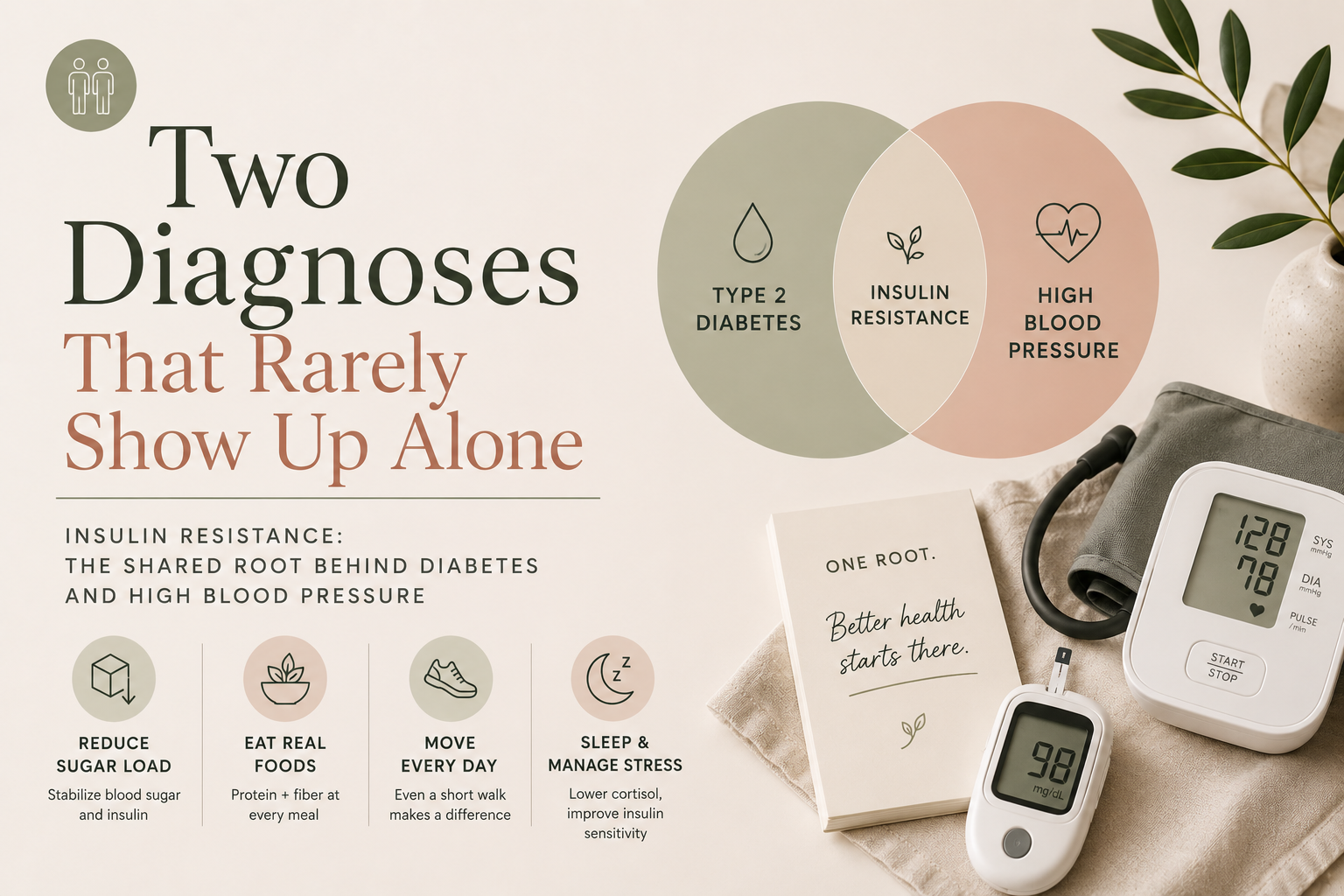
It's a pattern doctors see constantly: a person is diagnosed with high blood pressure, and within a few years, a type 2 diabetes diagnosis follows, or the order happens in reverse. On paper these look like two separate conditions, treated with two separate medications, tracked on two separate charts. In the body, they're frequently driven by the same underlying process: insulin resistance. Understanding that shared root doesn't just explain why the two conditions travel together so often, it also points toward why addressing them in isolation, medication for one and medication for the other, so often leaves the underlying problem untouched.
What Insulin Resistance Actually Is
Insulin's job is to help move glucose out of the bloodstream and into cells, where it can be used for energy. Insulin resistance develops when cells stop responding efficiently to insulin's signal, which forces the pancreas to produce more and more of it just to keep blood sugar within a normal range. For a while, this compensation works well enough that blood sugar can look normal on standard testing, even while insulin levels behind the scenes are running consistently high. It's this hidden phase, often lasting years, where the groundwork for both diabetes and hypertension tends to get laid.
How Insulin Resistance Eventually Raises Blood Sugar
Insulin resistance doesn't cause elevated blood sugar overnight. It's a gradual process: as cells become progressively less responsive, the pancreas eventually can't keep up with the demand for more insulin, and blood sugar levels start to climb, first showing up as prediabetes and, without intervention, progressing to type 2 diabetes. This is why fasting glucose or HbA1c can look completely normal for years even as insulin resistance is actively developing underneath.
How the Same Mechanism Raises Blood Pressure
Sodium and Fluid Retention
Chronically elevated insulin causes the kidneys to retain more sodium than they otherwise would, and sodium retention pulls more fluid into the bloodstream, directly increasing blood volume and, with it, blood pressure.
Activation of the Sympathetic Nervous System
High circulating insulin has a stimulating effect on the sympathetic nervous system, the body's 'fight or flight' branch, which increases heart rate and constricts blood vessels, both of which push blood pressure upward over time.
Impaired Blood Vessel Function
Healthy blood vessels rely on their inner lining to relax and widen appropriately in response to normal physiological signals. Insulin resistance is associated with reduced function of this lining, which stiffens blood vessels and makes it harder for them to relax normally, contributing directly to sustained high blood pressure.
Why Treating the Two Conditions Separately So Often Falls Short
When diabetes and hypertension are each treated purely with medication aimed at the downstream number, a glucose-lowering drug here, a blood-pressure medication there, without addressing the shared insulin resistance driving both, the underlying process often continues to progress quietly in the background. This is part of why so many people end up on an increasing number of medications over the years rather than seeing their overall metabolic picture actually improve.
Shared Risk Factors Worth Understanding
Excess visceral fat around the abdomen, chronic stress, poor sleep, a sedentary lifestyle, and a diet consistently high in refined carbohydrates and added sugar all contribute to insulin resistance, and by extension, to the shared risk of both diabetes and hypertension. Family history plays a role as well, but these lifestyle factors are where the most meaningful, modifiable leverage tends to exist.
What Actually Helps Address the Root Cause
Reduce Refined Carbohydrate and Sugar Load
Since refined carbohydrates and added sugar produce the sharpest, most frequent insulin spikes, shifting toward whole, fiber-rich carbohydrate sources reduces the overall demand placed on the insulin system throughout the day.
Prioritize Protein and Fiber at Each Meal
Meals built around a clear protein source and a generous portion of fiber blunt the blood sugar and insulin response compared to carbohydrate-heavy meals eaten alone, which over time reduces the chronic burden on both the pancreas and the vascular system.
Move Regularly, Especially After Meals
Physical activity, even a short walk after eating, improves how efficiently muscles take up glucose, reducing the amount of insulin required to manage the same meal. This effect is well-documented and doesn't require intense exercise to produce a meaningful benefit.
Support Sleep and Manage Chronic Stress
Both poor sleep and ongoing psychological stress raise cortisol and worsen insulin sensitivity, which means addressing them isn't separate from managing blood sugar and blood pressure, it's a direct part of the same picture.
Work With a Doctor on Ongoing Monitoring
For anyone already diagnosed with hypertension, prediabetes, or diabetes, working with a physician to track insulin levels alongside glucose and blood pressure, rather than glucose and blood pressure in isolation, gives a fuller picture of whether the underlying insulin resistance is actually improving over time.
The Bottom Line
Type 2 diabetes and high blood pressure so often appear together because they frequently share the same underlying driver: insulin resistance, quietly progressing for years before either condition shows up on a standard lab report. Recognizing that connection changes the goal from managing two separate numbers to addressing the process feeding both of them, through diet, movement, sleep, and stress management, alongside whatever medical treatment a doctor recommends for each individual case.
Frequently Asked Questions
Can insulin resistance cause high blood pressure without diabetes?
Yes. Insulin resistance can raise blood pressure through sodium retention, nervous system activation, and blood vessel effects well before blood sugar itself becomes abnormal enough to be classified as diabetes.
Does losing weight reverse insulin resistance?
For many people, particularly reducing visceral abdominal fat, meaningfully improves insulin sensitivity, though the diet quality and activity level driving that change matter as much as the number on the scale.
Should insulin levels be tested alongside blood sugar and blood pressure?
Fasting insulin isn't part of every standard panel, but for those with a family history of diabetes or hypertension, asking a doctor about testing it can offer an earlier signal than glucose alone.