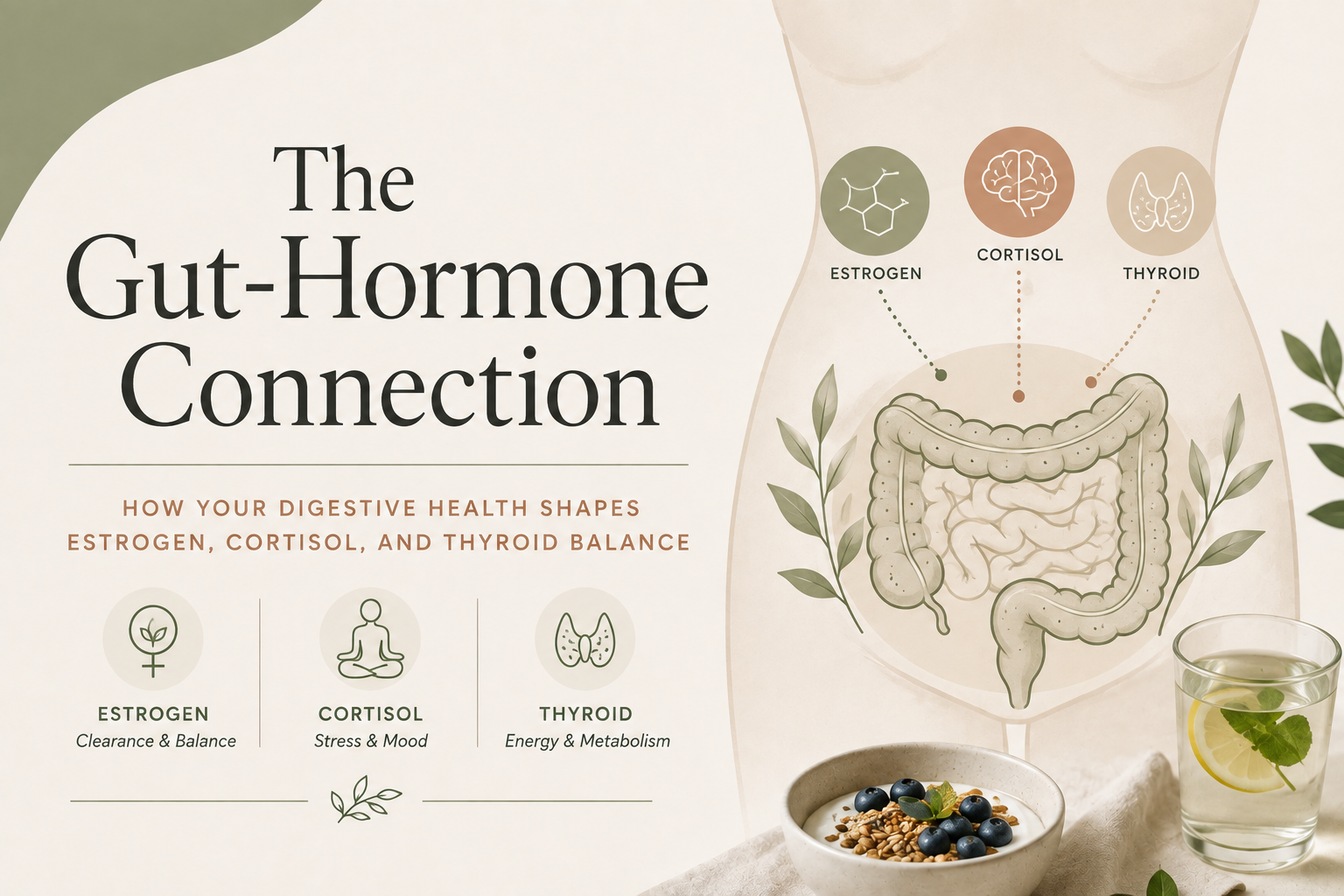
The Gut-Hormone Connection: How Your Digestive Health Shapes Estrogen, Cortisol, and Thyroid Balance
Your gut plays a direct role in how your body processes estrogen, cortisol, and thyroid hormones. Learn how the gut-hormone axis works and how to support it through everyday nutrition.
Written By Admin
Published On JULY 29, 2026
The Gut-Hormone Connection: How Your Digestive Health Shapes Estrogen, Cortisol, and Thyroid Balance
Ask most women what controls their hormones, and the answer usually points somewhere between the ovaries, the thyroid, and maybe the adrenal glands. Rarely does anyone mention the gut. Yet tucked inside your digestive tract is a system so deeply involved in hormone regulation that researchers have started giving it its own name: the gut-hormone axis.
This isn't a fringe wellness theory. It's an active, evolving area of research that helps explain why so many hormonal symptoms, from stubborn PMS to unexplained fatigue to thyroid struggles, don't resolve through hormone-focused treatment alone. If the gut is quietly working against you, even the most targeted hormonal support can feel like it's fighting an uphill battle.
Your Gut Does More Than Digest Food
It's tempting to think of the gut purely as a processing tube, something food passes through on its way to becoming energy and waste. In reality, your digestive tract houses trillions of bacteria, produces a significant portion of your body's serotonin, plays a central role in immune function, and directly influences how several major hormones are metabolised and cleared from the body.
This is why gastroenterologists and endocrinologists increasingly collaborate rather than working in separate silos. The line between "digestive health" and "hormonal health" is far blurrier than most people assume, and for many women, symptoms that look purely hormonal on the surface actually trace back to what's happening in the gut.
How the Gut Regulates Estrogen: Meet the Estrobolome
Within your gut microbiome exists a specific collection of bacteria known as the estrobolome, named for its direct role in estrogen metabolism. These bacteria produce an enzyme called beta-glucuronidase, which determines whether processed estrogen gets excreted from the body or reactivated and sent back into circulation.
When the estrobolome is balanced, this system works quietly and efficiently, supporting healthy estrogen clearance. When gut bacteria become imbalanced, a state often referred to as dysbiosis, beta-glucuronidase activity can increase, allowing more estrogen to recirculate than intended. Over time, this may contribute to symptoms associated with estrogen dominance, including heavier or more painful periods, breast tenderness, and worsened PMS, and has been studied in relation to conditions like endometriosis.
The Gut's Role in Cortisol Regulation
The gut and the brain communicate constantly through what's known as the gut-brain axis, a two-way communication network involving the vagus nerve, immune signalling, and gut bacteria themselves. This connection means gut health can directly influence how your body produces and regulates cortisol, your primary stress hormone.
An imbalanced or inflamed gut can trigger low-grade immune activation, which in turn can influence the hypothalamic-pituitary-adrenal axis, the system responsible for cortisol production. Some research suggests that a healthier, more diverse gut microbiome is associated with a more balanced cortisol response to stress, while gut inflammation may contribute to a more reactive, harder-to-regulate stress response over time.
Thyroid Function and the Gut: An Overlooked Link
Around twenty percent of thyroid hormone conversion, the process of turning inactive T4 into the active T3 form your cells actually use, takes place in the gut, aided by specific gut bacteria and enzymes. This means gut health has a direct, measurable line to thyroid hormone activity, not just a loose theoretical connection.
Additionally, gut permeability, sometimes referred to informally as "leaky gut," has been studied in relation to autoimmune thyroid conditions like Hashimoto's thyroiditis, since a compromised gut barrier may contribute to the kind of immune dysregulation involved in autoimmune disease. For women dealing with thyroid symptoms despite seemingly normal lab results, gut health is increasingly recognised as one of the pieces worth examining alongside standard thyroid testing.
Signs Your Gut-Hormone Axis May Be Out of Balance
No single symptom confirms a gut-hormone imbalance on its own, but certain patterns tend to cluster together. These include persistent bloating alongside hormonal symptoms like PMS or irregular cycles, skin issues such as acne that flare around your cycle, chronic fatigue that doesn't improve with rest, food sensitivities that seem to have developed over time, and digestive symptoms that worsen during particularly stressful periods. Together, these patterns are worth discussing with a healthcare provider rather than dismissing as unrelated, minor annoyances.
Supporting the Gut-Hormone Axis Through Nutrition
Feed a Diverse Microbiome
A wide variety of plant foods, including vegetables, fruits, legumes, nuts, and seeds, supports greater microbial diversity, which research increasingly links to healthier hormone metabolism across the estrobolome, cortisol regulation, and thyroid conversion.
Prioritise Fibre for Estrogen Clearance
Fibre binds to processed estrogen in the digestive tract, helping ensure it's carried out of the body rather than reabsorbed. Aim to include fibre-rich foods at most meals rather than treating it as an occasional add-on.
Include Fermented Foods When Tolerated
Yogurt, kefir, sauerkraut, and other fermented foods can introduce beneficial bacteria that support a more balanced gut environment, though individual tolerance varies and should be respected.
Support Gut Barrier Integrity
Nutrients like zinc, glutamine, and omega-3 fatty acids, found in foods like fish, shellfish, nuts, and seeds, have been studied for their role in supporting the integrity of the gut lining, which is relevant to both immune and hormonal health.
Manage Stress to Protect the Gut-Brain Connection
Since the gut-brain axis runs in both directions, chronic stress can degrade gut health just as much as poor gut health can worsen stress responses. Regular stress management supports this relationship from both sides simultaneously.
The Bottom Line
Hormonal health has traditionally been discussed almost entirely in terms of the ovaries, thyroid gland, and adrenal glands, with the gut left out of the conversation nearly completely. That's an incomplete picture. Your gut is deeply involved in how estrogen, cortisol, and thyroid hormones are produced, converted, and cleared from your body.
Supporting gut health through fibre, diverse plant foods, and stress management isn't a replacement for medical care when hormonal symptoms are significant, but it is a genuinely evidence-informed piece of the puzzle, one that deserves far more attention than it typically receives in mainstream hormone conversations.
Frequently Asked Questions
What is the estrobolome? The estrobolome is a collection of gut bacteria that produce enzymes involved in estrogen metabolism, directly influencing whether estrogen is cleared from the body or reabsorbed into circulation.
Can gut health affect thyroid function? Yes. A significant portion of thyroid hormone conversion from inactive to active form occurs in the gut, and gut health has also been studied in relation to autoimmune thyroid conditions.
How does the gut affect cortisol levels? The gut and brain communicate through the gut-brain axis, and gut inflammation or imbalance may influence the body's stress response system, potentially affecting cortisol regulation.
What foods support the gut-hormone connection? A diverse range of plant foods, adequate fibre, fermented foods when tolerated, and nutrients that support gut barrier integrity, like omega-3 fats and zinc, all play a supportive role.
Should I get my gut health tested if I have hormonal symptoms? If you're experiencing persistent hormonal symptoms alongside digestive issues, it's worth discussing both with a healthcare provider, who can help determine whether further gut-related testing is appropriate.