Reading Food Labels for Hormonal Health: What Women Should Really Be Looking For
Not all food label advice applies equally to hormonal health. Learn which ingredients matter most for insulin, estrogen, and inflammation, and how to read a label with your hormones in mind.
Written By Admin
Published On JULY 29, 2026
Reading Food Labels for Hormonal Health: What Women Should Really Be Looking For
General food label advice tells you to avoid too much sugar, watch your sodium, and steer clear of a long ingredient list. That advice isn't wrong, but it's generic, built for the average shopper rather than for a woman specifically trying to support her hormones through food.
If you're managing PCOS, navigating perimenopause, dealing with stubborn PMS, or simply trying to keep insulin and estrogen in a healthier range, certain parts of the ingredient label deserve more attention than others. This is a guide to reading labels specifically through a hormonal lens, so you know exactly what to look for and why it matters for your particular situation.
Why Generic Label Advice Falls Short for Hormonal Health
Most food label guidance focuses broadly on weight and general health, treating all shoppers as though they have identical priorities. But a woman managing insulin resistance has different label priorities than someone focused purely on calorie count, and a woman supporting estrogen clearance needs to notice different things than someone simply avoiding trans fats.
Understanding which specific ingredients interact with hormonal pathways lets you scan a label more efficiently, focusing your attention on what actually matters for your body rather than treating every ingredient with equal suspicion.
Hidden Sugars and Their Impact on Insulin
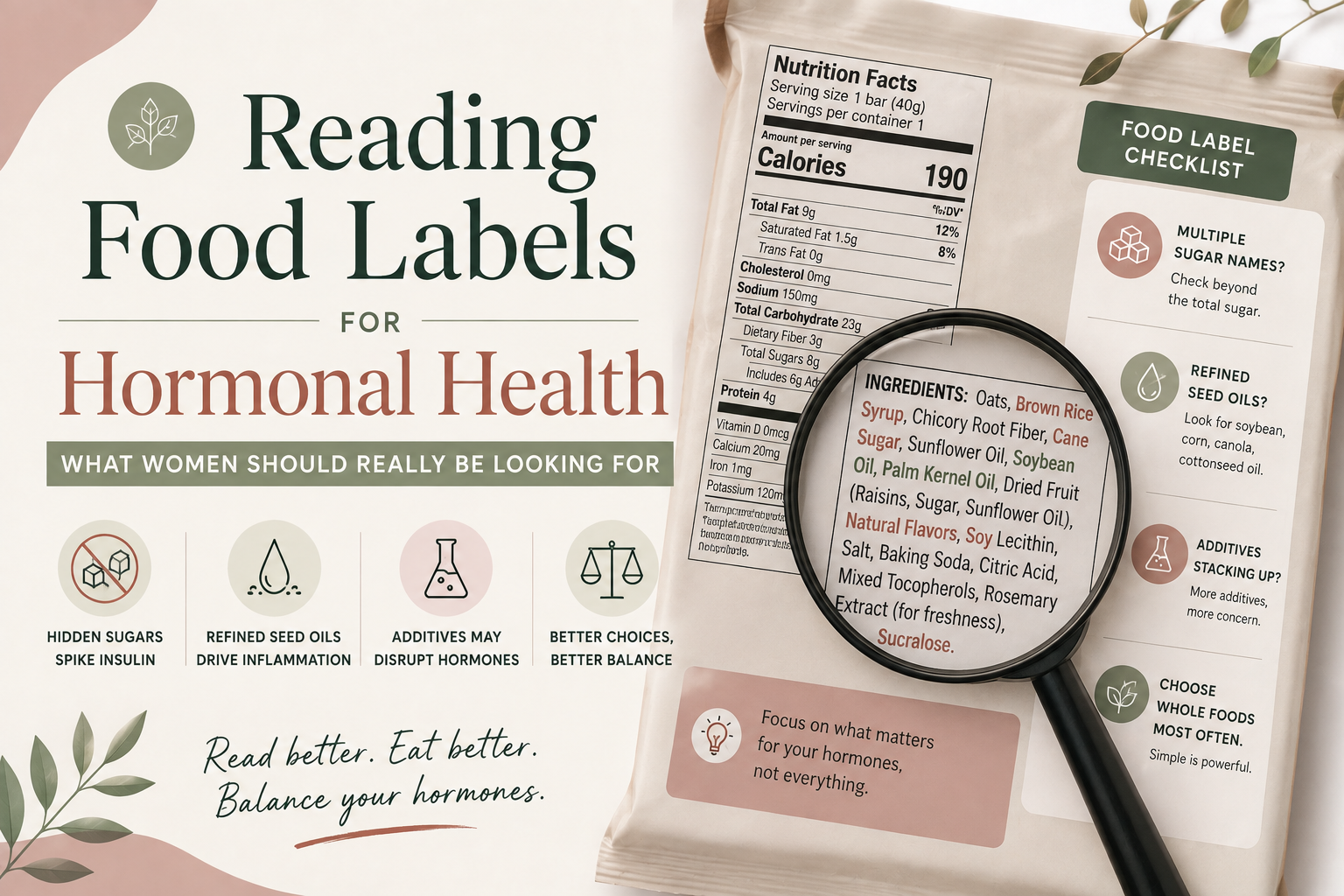
Sugar appears under dozens of different names on ingredient lists, including glucose syrup, dextrose, maltose, cane juice, and fruit juice concentrate, among many others. For hormonal health specifically, the concern isn't just calories, it's the effect repeated blood sugar spikes have on insulin levels, which directly influence androgen production in conditions like PCOS.
When scanning a label with hormones in mind, pay attention to how many different sugar sources appear, not just whether "sugar" is listed first. A product with several different sweeteners scattered through the ingredient list is delivering a bigger insulin load than the total sugar count alone might suggest, even if no single sugar source appears near the top.
Refined Seed Oils and the Inflammation Connection
Refined seed oils like soybean, cottonseed, and corn oil show up in a huge share of packaged snacks, baked goods, and fried products. For hormonal health, the relevant concern is less about any single oil being dangerous, and more about the cumulative omega-6 load these oils contribute when eaten frequently, particularly when paired with a diet low in omega-3-rich foods.
Since chronic low-grade inflammation is closely tied to conditions like PCOS and endometriosis, noticing how often refined seed oils appear across your regular packaged food choices, rather than fixating on any one product, is a more useful way to apply this information.
Additives Worth Watching for Hormonal Sensitivity
Certain additives deserve extra attention specifically in the context of hormonal health. Artificial colours and flavours, while not conclusively linked to hormonal disruption in current research, are markers of a more heavily processed product, which often correlates with the kind of refined carbohydrate and refined fat combination that worsens insulin sensitivity over time.
Preservatives like BHA and BHT have been studied for potential endocrine-disrupting activity in some research, though findings remain mixed and regulatory bodies continue to monitor this area. Rather than panicking over any single preservative, treat a long list of these additives appearing together as a signal of overall processing level, which is the more consistently reliable marker for hormonal impact.
Artificial Sweeteners and the Insulin Question
Products marketed as "sugar-free" or "diet" often rely on artificial sweeteners like sucralose or aspartame. While these don't spike blood sugar the way regular sugar does, some research suggests non-nutritive sweeteners may still influence insulin response and gut bacteria composition in ways that matter for hormonal health, particularly with frequent, high-volume use.
This doesn't mean artificial sweeteners need to be avoided entirely, but for women closely managing insulin sensitivity, it's worth being as mindful of sweetener frequency as of sugar itself, rather than assuming "zero sugar" automatically means "zero relevance" to hormone balance.
Sodium, Water Retention, and Cycle-Related Bloating
While sodium doesn't directly affect hormone production, high sodium intake can worsen water retention and bloating, symptoms that already tend to intensify during the luteal phase of the menstrual cycle for many women. Checking sodium content becomes particularly relevant on packaged foods you eat regularly, since these small, repeated exposures add up more than an occasional salty meal.
A Simple Hormone-Focused Label Checklist
Before buying a packaged product, ask three quick questions with your hormones specifically in mind. First, how many different sugar sources are scattered through this ingredient list, not just whether sugar appears near the top. Second, is this product relying heavily on refined seed oils, and how often do I eat products like this across my week. Third, are multiple additives, colours, and preservatives stacking up together, signalling a heavily processed product that's likely to affect insulin and inflammation more broadly, regardless of any individual ingredient's specific risk.
The Bottom Line
Reading food labels for hormonal health isn't about fear or perfection. It's about knowing which specific details matter most for your particular situation, whether that's insulin sensitivity, inflammation, or estrogen balance, so you can scan a label efficiently rather than getting lost trying to research every unfamiliar ingredient name.
Once you know what to look for, checking a label with your hormones in mind takes only a few extra seconds, and it puts genuinely useful, relevant information in your hands every time you shop.
Frequently Asked Questions
What should women with PCOS look for on food labels? Pay particular attention to how many different sugar sources appear in the ingredient list, as well as overall processing level, since both influence insulin response, which is closely tied to PCOS symptoms.
Are artificial sweeteners bad for hormone balance? Artificial sweeteners don't spike blood sugar the way sugar does, but some research suggests they may still influence insulin response and gut bacteria with frequent use, so mindful, moderate use is a reasonable approach.
Do seed oils on food labels matter for hormonal health? The concern isn't any single oil in isolation, but the cumulative omega-6 load from frequently eating packaged foods that rely heavily on refined seed oils, which may contribute to inflammation relevant to hormonal conditions.
Can food additives disrupt hormones? Research on specific additives and hormonal disruption is still developing and results are mixed. A more reliable approach is treating a long list of stacked additives as a general marker of high processing, rather than fixating on any single ingredient.
How is reading labels for hormones different from general healthy eating advice? General advice focuses broadly on sugar, sodium, and processing. A hormone-focused approach adds attention to sugar diversity, seed oil frequency, and additive stacking, since these specifically interact with insulin, inflammation, and estrogen pathways.