Amino Acids in Pregnancy: Glycine, Taurine, Arginine and Lysine Explained
Learn why amino acids in pregnancy matter beyond protein powder, including glycine, taurine, arginine, lysine, food sources, and pregnancy nutrition needs.
Written By Admin
Published On JULY 29, 2026
Protein Advice in Pregnancy Usually Stops Too Early
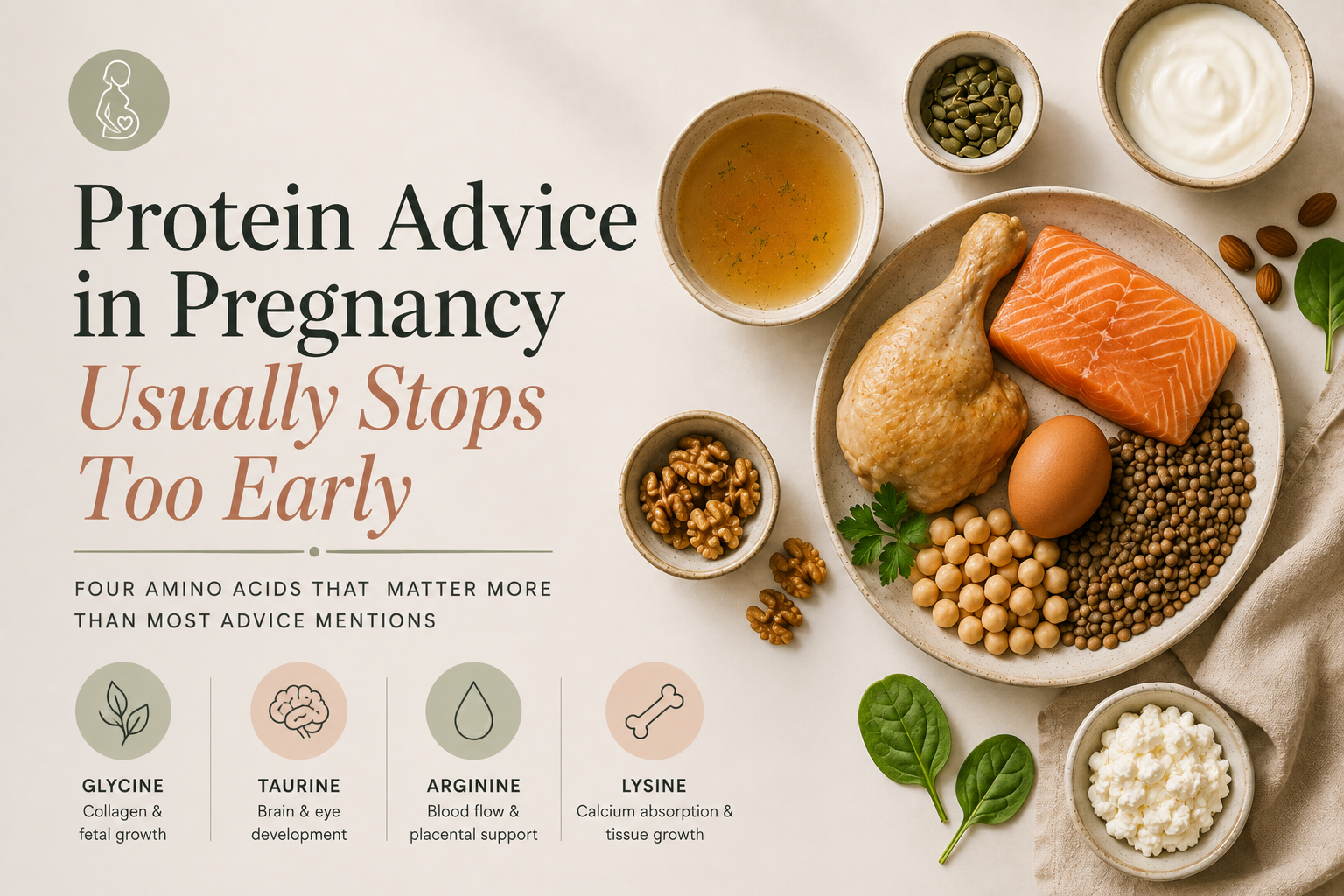
Most pregnancy nutrition advice on protein stops at a single number: aim for roughly 70 to 100 grams a day, more than the standard adult recommendation. That number matters, but it treats protein as one undifferentiated block, when in reality protein is built from individual amino acids, several of which have specific, well-documented roles during pregnancy that go well beyond general tissue building. Four in particular, glycine, taurine, arginine, and lysine, deserve more attention than they typically get in a standard prenatal conversation.
Why Amino Acid Needs Shift During Pregnancy
Some amino acids that the body can normally produce in sufficient quantities on its own become 'conditionally essential' during pregnancy, meaning the demands of a growing fetus and expanding maternal tissue can outpace what the body manufactures internally. This is the category that glycine, taurine, and arginine largely fall into, which is part of why they're worth understanding individually rather than assuming a general protein target automatically covers them.
Glycine
Glycine is involved in collagen synthesis, which becomes especially relevant as pregnancy places new demands on skin, connective tissue, and the growing uterus. Research has also pointed to glycine's role in fetal growth and development, with some studies suggesting maternal glycine synthesis alone may not fully meet the increased demand of pregnancy, particularly in the third trimester.
Good dietary sources of glycine include bone broth, collagen-containing cuts of meat such as skin-on chicken thighs or slow-cooked cuts, and gelatin. For anyone who doesn't eat much collagen-rich meat, this is one amino acid worth deliberately including rather than assuming a standard protein intake covers it.
Taurine
Taurine plays a role in fetal brain and eye development, as well as in regulating fluid balance and supporting the cardiovascular system, both of which are under increased demand during pregnancy. Unlike many amino acids, taurine isn't used to build proteins directly, instead functioning more like a regulatory compound throughout the body, but its importance during fetal development has made it a compound of specific research interest in maternal nutrition.
Taurine is found almost exclusively in animal foods, particularly seafood, meat, and dairy, which means those following a largely plant-based diet during pregnancy may have meaningfully lower taurine intake and could benefit from a conversation with their provider about whether additional support is warranted.
Arginine
Arginine is a precursor to nitric oxide, a compound that helps relax and widen blood vessels. During pregnancy, this matters directly for placental blood flow, since adequate circulation to the placenta supports nutrient and oxygen delivery to the developing fetus. Some research has explored arginine's potential role in supporting healthy blood pressure during pregnancy, though this remains an active area of study rather than settled practice.
Dietary sources of arginine include nuts, seeds, poultry, and legumes, making it one of the easier amino acids on this list to obtain through a varied diet that includes plant and animal protein sources alike.
Lysine
Lysine is an essential amino acid, meaning the body cannot produce it at all and it must come entirely from food. It plays a role in calcium absorption, collagen formation, and overall tissue growth and repair, all of which are relevant during a period of rapid maternal and fetal tissue development.
Because grains tend to be relatively low in lysine while legumes tend to be richer sources, a diet leaning heavily on bread, rice, and pasta without much variety from legumes, dairy, or meat can end up lower in lysine than expected, even when overall protein intake looks adequate on paper.
Why Protein Quantity Alone Isn't the Whole Picture
It's entirely possible to hit a daily protein gram target while still under-consuming specific amino acids, particularly for those eating a narrower range of protein sources, whether that's due to appetite changes, nausea, food aversions, or dietary preference. This is why pregnancy nutrition guidance that focuses purely on a gram target, without any attention to the variety of protein sources behind that number, can miss part of the picture.
Practical Ways to Cover These Amino Acids Through Food
Rotating protein sources across a week, rather than relying on the same one or two repeatedly, is the simplest way to cover this ground without needing to track individual amino acids. Including a mix of eggs, dairy, poultry, fish, legumes, nuts, and where tolerated, slow-cooked or bone-in cuts of meat or bone broth, naturally spreads intake across glycine, taurine, arginine, and lysine rather than leaning on a single protein source for the entire day.
When Supplementation Might Come Up
For those following a vegan or largely plant-based diet, or dealing with significant nausea that limits food variety, a conversation with an obstetrician or prenatal dietitian about whether targeted supplementation, particularly around taurine, makes sense is worthwhile. This isn't a decision to make independently, since individual needs and existing prenatal supplement regimens vary considerably.
The Bottom Line
Protein during pregnancy isn't just about hitting a daily gram count; it's about the specific amino acids behind that number. Glycine, taurine, arginine, and lysine each play distinct roles in supporting maternal tissue, placental function, and fetal development, and each has its own pattern of food sources. Eating a genuinely varied mix of protein sources across the week is the most practical way to cover this ground, with a targeted conversation with a provider reserved for those whose diet is more restricted.
Frequently Asked Questions
Can I get enough taurine on a plant-based diet during pregnancy?
Taurine is found almost exclusively in animal foods, so those on a largely plant-based diet may have lower intake and should discuss this specifically with their provider.
Is bone broth a good source of glycine in pregnancy?
Yes, bone broth and collagen-containing cuts of meat are among the more concentrated dietary sources of glycine.
Do I need to track amino acids individually during pregnancy?
Not usually. Eating a varied mix of protein sources across the week generally covers these amino acids without needing to track each one individually, unless your diet is notably restricted.